Eco-friendly products connect coastal retail to what matters most.
The connection between products and their tie-in to the coast has always been an essential part of a coastal-retailers’ offerings. And as consumers become more aware of the impact their decisions have on their environment, eco-friendly merchandise is no longer a niche, it’s an expectation. Shoppers want to feel a direct relationship to the oceans they visit. And seaside retailers play an important role.
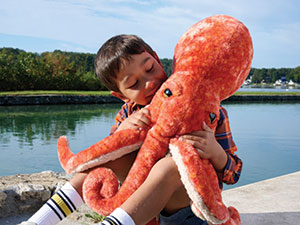 Zoologee ensure sustainability is woven into every product. “Seaside retailers are uniquely positioned to tell a conservation-focused story,” says Abby Lizewski, digital marketing, Zoologee. “Customers visiting coastal destinations aquariums, and marine attractions already feel a natural connection to ocean life and environmental protection.”
Soft, but sustainablePlush remains one of the most accessible and effective entry points into eco-friendly retail, combining emotional appeal with a clear sustainability story.
At Zoologee, that story starts with materials and extends through the entire product lifecycle. “Our eco-friendly plush incorporate materials such as recycled plastic bottle fiber filling, recycled threads, soy-based inks, and recycled paper packaging components,” says Lizewski. “These choices reduce waste while giving materials a second life in products designed to last.”
Collections like Earth Keeperz and Wild Onez continue to perform strongly, particularly in coastal stores where marine life is front and center. Sea turtles, dolphins and sharks not only reflect the environment but also reinforce conservation messaging.
That combination of education and engagement is also central to Call For The Wild. “Our goal is to fundraise for wildlife, educate the next generation and push our industries into a new era of sustainability,” says Billy Campisciano, executive director, Call For The Wild Foundation.
The brand’s baby sea turtle hatchling eggs — plush made from recycled bottles and packaged in compostable sugarcane resin — offer an interactive experience that goes beyond a simple purchase, encouraging kids to learn about marine ecosystems and conservation efforts.
At RGU Group, sustainability is paired with bold, contemporary design. “Our two eco-focused product lines are made from 100% recycled plastic and are GRS (Global Recycled Standard) certified,” says Connor Atkins, brand and creative manager, RGU Group. “As of late 2025, we’ve reclaimed more than 27 tons of plastic — equivalent to approximately 2.5 million half-liter bottles.”
All of Fiesta plush use recycled materials. “While Fiesta is not the only company working towards a more sustainable line, we like to push ourselves daily to ask how can we get better,” says Coral Reynolds, president of Fiesta.
For example, instead of a traditional disposable hang tag, the new Root Cuties' hang tags are embedded with wildflower seeds for planting.
Conscious comfortsIn apparel and accessories, eco-friendly innovation is being driven by material choices, durability and multi-use functionality — without sacrificing the style coastal shoppers expect.
Shaka Love is leaning into that balance with its collection of Turkish towels, beach blankets and wearable pieces made from recycled cotton.
“Our products are crafted using recycled cotton fibers, which significantly reduce water usage and textile waste compared to conventional cotton production,” says Amy Connelly, founder and owner, Shaka Love.
 Señor Lopez sustainability is at the forefront of product development and contribute to consumer appeal to the brands. These products also align with broader consumer trends. “Customers want eco-friendly products that still feel beautiful, functional and giftable,” Connelly adds.
At Señor Lopez, sustainability is built into the production process.
“All [products are] crafted on pre-consumer, 100% recycled threads,” says Gary Crane, president/owner, Señor Lopez. “We source scrap trim from T-shirt production, gather by color and craft new yarns for our custom weave.”
The result is a line of Baja blankets, hoodies and accessories that feels both authentic and environmentally responsible, offering retailers a product that stands out visually while supporting waste reduction.
Personal care connectionFor Coconut Smuggler, sustainability starts with function, offering haircare designed specifically for sun, salt and surf.
“All Coconut Smuggler products are designed with sustainability in mind,” says owner Brittany Jones. “We focus on ocean-proof haircare and coastal lifestyle essentials, including our pre-ocean protectant, post-ocean repair leave-in, and signature fragrance.”
Sustainability extends to packaging and ingredients. “Our bottles are aluminum, our perfume rollers are glass with bamboo components, and we minimize plastic wherever possible,” she says. “We prioritize reef-safe ingredients and thoughtfully sourced oils that support both hair health and ocean health.”
That approach aligns with shifting consumer expectations. “Shoppers are asking not only ‘Does this work?’ but also ‘Where does it come from?’ and ‘What impact does it have?’” Jones says.
sustainable stylesEco-friendly home goods are also gaining traction for their ability to combine sustainability with everyday functionality.
Wet-it! has found success with its Swedish dishcloths, which replace disposable paper towels with reusable, biodegradable alternatives.
“Made to replace paper towels, these reusable, biodegradable, compostable cloths help keep single-use products out of our oceans and off our beaches — something every coastal customer cares about,” says Mathilda Davies, owner and founder, Wet-it!
Their compact size, affordability and coastal-themed designs make them easy to merchandise and highly giftable, while their functionality encourages repeat purchases.
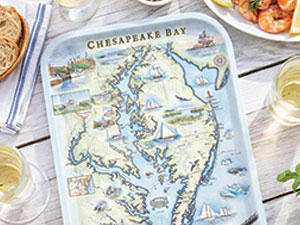 Responsibly sourced materials like FSC-certified birchwood is used in Xplorer Maps’ products, including this serving tray. Xplorer Maps emphasizes responsibly sourced materials like Forest Stewardship Council certified birchwood in its trays and other home products.
“Choosing FSC-certified products helps drive demand for ethical forestry practices that protect ecosystems and reduce deforestation,” says Greg Robitaille, president and founder, Xplorer Maps.
He also points to a shift in consumer expectations: “Store owners seem to be sharing increased feedback from their customers who are looking for (and expecting) higher travel gifts. Finding smaller ‘craft’ businesses with a vision and mission similar to ours is becoming increasingly important.”
More than a trendEco-friendly products carry particular significance in coastal environments, where the impact of environmental challenges is often visible.
“Seaside retailers are among the first to feel the consequences when we fail to maintain an eco-friendly relationship with the seaside,” says Call For The Wild’s Campisciano.
By offering products made from recycled materials, reducing reliance on single-use items and supporting brands with conservation-focused missions, coastal retailers can play a meaningful role in shaping consumer behavior.
|