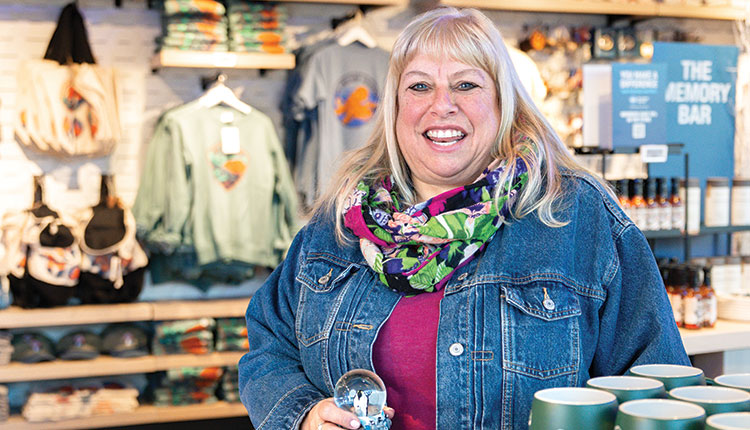
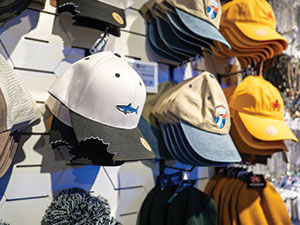
Inside the New England Aquarium Shop, conservation, experience retail and high-volume merchandising come together.
Visitors exiting the Giant Ocean Tank at the New England Aquarium in Boston often take a detour before heading home. Penguins waddle nearby. Stingrays glide through the touch tank. Families linger over favorite exhibits, replaying moments that made the visit memorable.
And recapping a full day of sea life stories and up-close experiences is an engaging display in its own right: the aquarium gift shop.
About 75% of guests pass through the store — a 3,000-square-foot retail space that functions as a souvenir destination and an extension of the aquarium’s conservation mission. “When guests walk into the shop, we want them to feel connected, not just to the animals they’ve just seen, but to the mission behind them,” says Lisa Zajonc, store director.
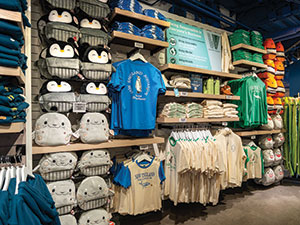 Squishy plush surrounds some name-drop tees. Photos: Samantha Barracca That philosophy shapes everything from product assortment to packaging choices. It’s also why the shop has become a standout example of how modern destination retail can seamlessly blend mission, memory-making and merchandising strategy.
Zajonc says, “Retail is part of the overall story we’re telling at the aquarium.”
Telling the story Zajonc joined the aquarium shop two years ago after a decades-long career with The Walt Disney Company, where she oversaw retail operations across New England.
“The assortment we have here is very similar in spirit to what we had in Disney stores,” she relates. “It’s experience retail. It’s about making sure guests create a memory while they’re here and take something home that reminds them of that experience.”
In the aquarium shop, that memory often takes the form of plush sea creatures, marine-themed apparel or souvenirs tied directly to exhibits guests just visited. Penguins, turtles, sharks and stingrays shape the store’s core motifs.
The goal is authenticity. If an animal doesn’t live at the aquarium or connect to its exhibits, it typically doesn’t appear in the store. “We stay very true to the animals that our guests experience here,” Zajonc says.
And for Zajonc, storytelling is just as important as merchandising and team members are trained to answer questions. New hires complete a scavenger hunt through the aquarium during onboarding to familiarize themselves with the exhibits and animals. The exercise takes about 90 minutes.
The process often leads to more thoughtful customer service. “We want them to understand the animals so they can talk about them with guests,” Zajonc says.
A fresh ‘sea scape’The shop’s merchandising strategy was revitalized and redeployed in late 2024, following a comprehensive renovation. After decades without a significant update, the store inside this longtime institution had needed a floor-to-ceiling refresh designed to improve product visibility, guest flow and transaction speed.
“We’re a store that had been around for quite a while and we were a bit tired,” Zajonc relates, noting the rehab as a prime opportunity for elevating the retail experience. “It gave us a chance to rethink the layout and make the space feel fresh.”
One of the biggest changes involved relocating the cash wrap from the back of the store to the center. The shift opened up the front window area for product displays and improved circulation throughout the shop. Better flow encourages more browsing.
The redesign also introduced three self-checkout stations alongside three traditional registers, a move that dramatically increased transaction capacity during peak season. At first, some guests veered away from self-checkout.
“A lot of people think self-checkout takes away jobs, but that is not the case here,” she explains. “The benefit is, we always have someone at self-checkout assisting and engaging with customers, and it cuts down on lines.”
Efficiency goes a long way toward creating a winning end to an aquarium visit. “My goal is to never have anyone standing in line longer than three or four minutes.”
Relevancy rules At just 3,000 square feet, the aquarium shop makes sure to maximize every inch possible.
Folded and hanging apparel stretches from floor to ceiling along the walls, allowing guests to see graphic designs while maintaining full size runs behind the displays.
“Hanging apparel is what people look for first because they can see the graphics,” Zajonc explains. “But we make sure we always have all the sizes available.”
One of the store’s fastest-growing categories is apparel, led by adult sweatshirts and T-shirts along with pajama pants and casual accessories.
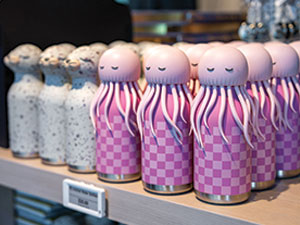 Octopus and seals are popular motifs at the New England Aquarium store. Recent additions also reflect the shop’s sustainability focus. One vendor, Refried Apparel, produces garments made from repurposed fabric remnants — meaning each denim jacket, sweatshirt or bucket hat is completely unique.
“People love the denim jackets,” Zajonc says. “Every one is different.”
Plush is also a characteristic centerpiece and magnet for young visitors. “When families come in, the kids almost always lead the way to plush,” Zajonc says.
A signature three-tier display dubbed the store’s “plush continent” anchors the sales floor and holds double the inventory capacity of the previous design.
A newer addition to the assortment is Plushy’s Closet, a line of miniature outfits that allows kids to dress up their plush animals. The stuffy costumes transform a penguin into a butterfly, dinosaur or other whimsical character — a take off of the Build-a-Bear dress-up concept.
“Most kids already have a lot of stuffed animals at home,” Zajonc adds. “Parents like being able to add something different.”
A mission and memoriesAcross product categories, mission alignment is essential. The New England Aquarium Shop was the first aquarium retail operation in the country to implement Event Network’s Plastic S.T.O.P.S. initiative, a program aimed at reducing dependence on newly produced plastic. The shift required a comprehensive review of the shop’s assortment.
“It challenged us to rethink what we carry and how products show up on our shelves,” Zajonc says.
Plastic-wrapped candy was replaced with wax-paper alternatives. Toys packaged in plastic were phased out or replaced with items made from recycled materials.
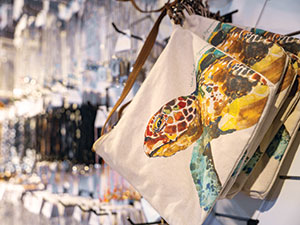 Turtle-themed handbags make for standout souvenirs. “It’s not about eliminating plastic completely,” Zajonc explains. “It’s about reducing virgin plastic and using recycled materials wherever possible.”
While the initiative narrowed the pool of available products in some categories, it also opened the door to more environmentally aligned merchandise. The shop expanded its offerings from local vendors since its initial plastics purge and now includes offerings from Maritime Tribes, Mystic Knotwork and Beacon Design.
Reusable shopping bags further support the sustainability focus, replacing single-use plastic bags entirely. Beyond sustainable sourcing, the aquarium shop reinforces its mission through direct financial support. A percentage of every purchase contributes to the aquarium’s work in conservation, education and animal care.
Guests can also participate through a round-up donation program at checkout, directing spare change toward the institution’s initiatives. When staff explain where the funds go, Zajonc says guests are often eager to contribute.
Really, the aquarium shop’s mission is two-fold, reinforcing conservation while extending the experience.
“When people walk out the door with something that reminds them of what they experienced here,” she says, “that’s when we know we’ve done our job.”
|